
 at
at 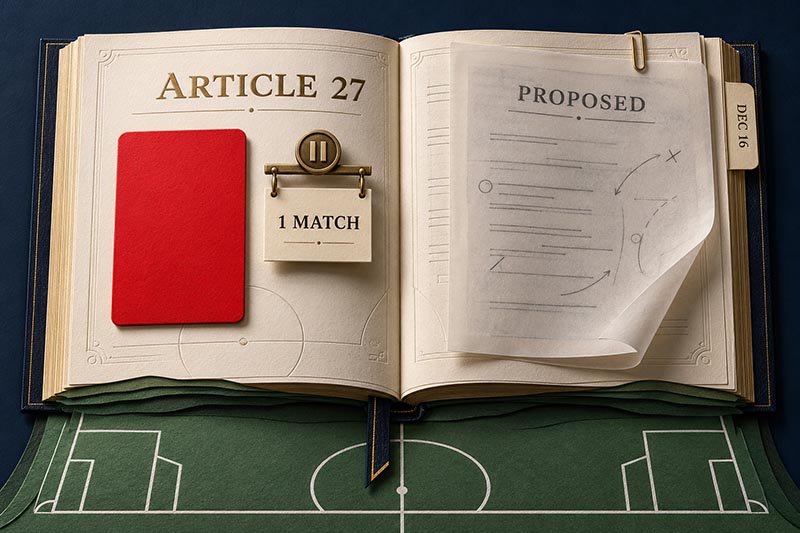
FIFA is preparing to amend the disciplinary provision used to suspend Folarin Balogun’s automatic World Cup ban, according to the Belgian Football Association. The move follows months of questions about how the United States forward was cleared to face Belgium despite receiving a red card in his previous match.
The Belgian federation announced the development on October 15, following a FIFA Council meeting in Zurich. A proposed amendment to Article 27 is due to be submitted for approval at the next Council meeting in Doha on December 16.
The rule has not yet been changed. The announcement establishes a timetable for considering an amendment, while leaving the wording and practical effect of the proposed revision to be clarified.
The Dispute Concerns How a Ban Was Suspended
Balogun was sent off during the United States’ World Cup victory over Bosnia and Herzegovina in July. The dismissal carried an automatic suspension for the next match, which would have ruled him out of the knockout meeting with Belgium.
FIFA subsequently used Article 27 to suspend the implementation of that punishment for a probationary period of one year. Balogun was therefore eligible to play against Belgium on July 6.
The distinction is important. FIFA did not erase the referee’s red card. It delayed enforcement of the resulting ban, with the punishment potentially becoming active if Balogun committed another infringement of a similar nature and seriousness during the probationary period.
That brought two parts of the disciplinary system into conflict in the eyes of critics. One establishes an automatic consequence for a sending off. The other gives the disciplinary body discretion to suspend enforcement of a sanction.
For teams preparing for a knockout match, the practical consequence is immediate. A player expected to be unavailable can become eligible again, changing the opposition’s attacking options shortly before kickoff.
Belgium Wants Explanations Alongside the Amendment
Pascale Van Damme, president of the Belgian federation and a FIFA Council member, raised three issues in Zurich. She requested assurances against outside interference, an explanation of the exceptional circumstances behind Balogun’s reprieve, and guarantees that member associations would have an opportunity to be heard in future disciplinary matters.
Belgium’s concern about access to the process dates back to the tournament itself. In a July statement, the federation said it had initially requested the decision and supporting reasons after learning about Balogun’s eligibility through media reports.
According to that account, FIFA treated the correspondence as an appeal and gave Belgium only a short period to complete its submission. The federation argued that it could not properly challenge a decision without first receiving its reasoning.
Those were Belgium’s allegations about the procedure. The latest statement shows that the federation continues to seek answers, rather than treating the promise of a regulatory amendment as a resolution of every issue it raised.
FIFA Maintains Its Disciplinary Bodies Act Independently
The controversy also drew scrutiny because Donald Trump publicly acknowledged asking FIFA president Gianni Infantino to review Balogun’s sanction during the World Cup.
Infantino said at the time that he had explained to Trump that the matter was being handled by FIFA’s independent judicial bodies. The existence of the call does not, by itself, establish that political pressure determined the disciplinary ruling.
In its account of the October meeting, the Belgian federation said FIFA again emphasized the independence of its disciplinary bodies. FIFA’s administration is also expected to provide further information about the circumstances of the Balogun case.
December Meeting Will Determine the Next Step
The December 16 FIFA Council meeting is the next scheduled decision point. Until the proposed text is available, it remains unclear how Article 27 would be restricted or clarified, and how the revised provision would interact with automatic match suspensions.
For national teams and players, the significance lies in predictability. Any amendment will need to explain when a disciplinary exception is available and how affected associations can understand or challenge its use before another tournament faces the same uncertainty.