
 at
at 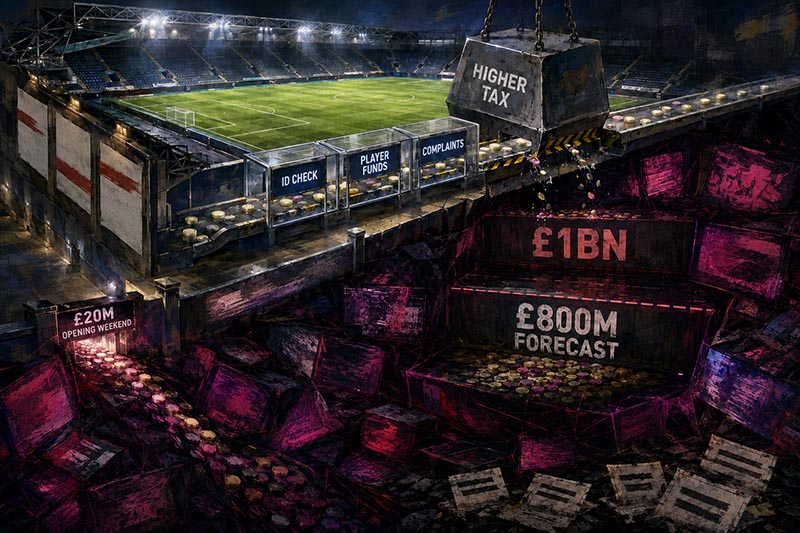
Illegal betting on Premier League matches could reach around £1 billion per season as the UK’s regulated gambling sector faces higher taxes and growing competition from unlicensed operators.
Illegal Bets Could Reach £800m This Season
The Betting and Gaming Council (BGC) expects unlicensed operators to take as much as £800 million in Premier League bets during the 2026/27 season. Around £20 million was forecast to be wagered through illegal bookmakers over the opening weekend alone.
A typical Premier League round is thought to generate between £15 million and £20 million in black-market wagers. The BGC believes that total could rise by another £200 million next season, putting annual illegal Premier League betting close to the £1 billion mark.
The forecast arrives as licensed bookmakers prepare for another increase in betting taxes. The BGC argues that extra costs placed on regulated firms risk making offshore alternatives more attractive to some customers.
Shirt Sponsors Change, but Illegal Operators Remain
The 2026/27 campaign is also the first Premier League season without betting companies appearing on the front of club shirts under the voluntary agreement approved by clubs in 2023. Gambling brands can still feature elsewhere, including sleeves and training wear.
The BGC supports government plans to stop Premier League clubs from signing sponsorship deals with gambling companies that lack a UK license. It wants the same restriction applied across British sport.
That leaves an awkward problem for the industry. Licensed gambling brands are becoming less visible in football, while offshore operators continue reaching British customers through online advertising, affiliates and other digital channels.
Tax Pressure Fuels the Black Market Argument
The BGC has repeatedly linked tougher financial conditions for licensed operators with growth in illegal gambling. H2 Gambling Capital expects the amount wagered with unlicensed operators across Britain to rise from almost £17 billion this year to more than £33 billion by 2028.
Research cited by the trade body also suggests unregulated companies now account for almost half of UK gambling advertising spending.
The industry’s argument is simple: make licensed betting too expensive or restrictive and some customers will look elsewhere. Regulators and policymakers, of course, also have to balance that concern against safer gambling rules and consumer protection.
What It Means for Players
For the average bettor, the difference between a licensed and unlicensed sportsbook becomes painfully clear when something goes wrong.
UK-licensed operators must follow rules covering customer funds, safer gambling, identity checks and complaints. Offshore sites operating outside the regulated market may offer fewer safeguards if a withdrawal is delayed, an account is closed or winnings are disputed.
That is the crux of the BGC’s warning. The lure of fewer restrictions or bigger promotions can look appealing, but the bargain becomes less attractive when there is no UK regulator to turn to if the operator refuses to pay.
With Premier League betting already one of Britain’s biggest gambling markets, the fight over tax, advertising and black-market play is unlikely to disappear quietly. If the £1 billion forecast proves accurate, illegal sportsbooks will be taking a very large slice of football betting business that licensed operators thought was theirs.