
 at
at 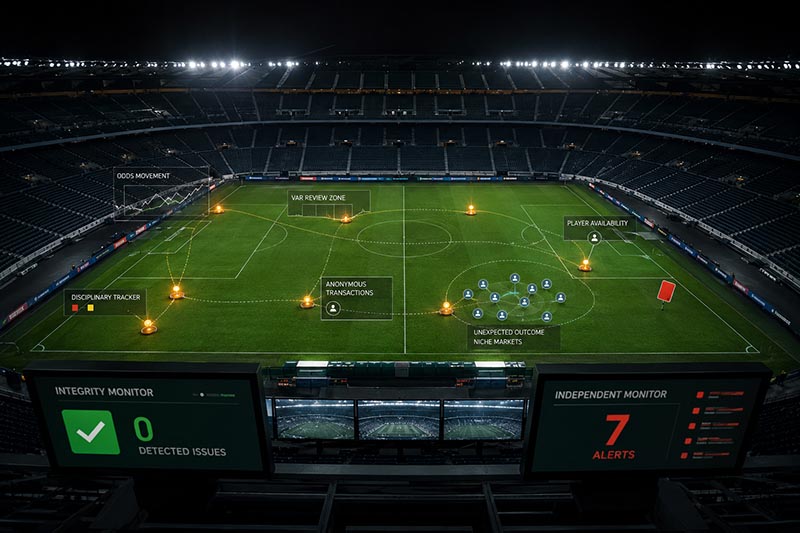
Seven unusual betting patterns were flagged during the 2026 World Cup, and while none proves match-fixing, the split between monitors deserves a closer look.
FIFA Says Nothing Was Wrong
FIFA’s Integrity Task Force said it found no suspicious betting activity across the tournament’s 104 matches.
The Group of Copenhagen took a different view. The Council of Europe-linked integrity network reportedly issued seven “yellow notices” after spotting betting behavior that warranted further review.
A yellow notice is not proof of corruption. Odds move for many legitimate reasons, from late team news to sharp betting action. Still, seven alerts sit awkwardly beside FIFA’s clean bill of health.
For bettors, the obvious question is simple: why did one monitoring group see warning signs while another saw none?
The Balogun Bet Looked Odd
One flagged market concerned whether US forward Folarin Balogun would play against Belgium after being sent off against Bosnia and Herzegovina.
His suspension was later overturned, allowing him to feature. Reports said no similar market appeared for other players sent off during the tournament.
That is where things become uncomfortable. Disciplinary decisions are made privately, meaning a small circle may know the outcome before the public.
There is no evidence that insiders profited. Even so, highly specific markets can leave ordinary players betting against people with far better information.
Big Bets and Strange Moments
Other alerts reportedly involved Themba Zwane’s red card for South Africa against Mexico and a lengthy VAR review that ruled out a Ferran Torres goal for Spain against Saudi Arabia.
More than £3.5 million was also reportedly wagered on Cape Verde to avoid defeat against Spain. The match ended 0-0.
A huge winning bet is not automatically suspicious. What matters is when the money arrived, how quickly the odds moved and whether several accounts acted before news became public.
That is the difference between a brave punt and something investigators may want to examine.
Prediction Markets Create Blind Spots
Licensed sportsbooks usually know who their customers are and can share account data with regulators.
Prediction platforms may be harder to monitor, especially when cryptocurrency, pseudonymous users or multiple jurisdictions are involved.
To a player, the products can look almost identical. Behind the scenes, the protections may be very different.
That matters most in niche markets tied to suspensions, VAR calls or player availability, where one piece of private information can change the price in seconds.
What Players Should Take Away
There is no confirmed evidence that any World Cup match was fixed. There is, though, a clear disagreement between two integrity operations.
Players should be especially cautious with obscure proposition and prediction markets. They may be entertaining, but the information gap can be far wider than it is with standard match odds.
FIFA does not need to invent a scandal. It does need to explain why independent monitors raised seven alerts while its own review found nothing suspicious.
For bettors putting real money on the line, “nothing to see here” is not much of an answer.